Most people who ask about yacht ownership have already done the obvious math. The boat costs $3 million; OK, that's a number. What they haven't done is the real math, the one that includes the slip, the captain, the depreciation, the dead weeks, the divorce risk of explaining a $40K maintenance bill at the dinner table. The advertised cost of getting onto a yacht is rarely the bill you actually pay.
We talk to prospective members every week. The first thing they want is the spreadsheet. Not the brochure, not the lifestyle pitch, the math. So here it is, four ways, in numbers we'd defend in a deposition.
The four paths to time on a yacht
There are essentially four ways a non-billionaire spends real days on a 60-plus-foot luxury yacht in Southern California:
- Buy one outright, the romantic option, and the most expensive way to do almost anything.
- Fractional ownership, split the asset and the costs with three or four other people who you may or may not like in two years.
- Join a yacht club, cheap on paper, but with caveats that show up in week three.
- Buy a yacht membership, what we sell, and what we'll lay out alongside the others without flinching.
We're going to walk each one with real numbers for the same hypothetical buyer: someone who wants 20 to 30 days a year on a 65-to-70-foot yacht, mostly weekends, with friends and family, around San Diego and Newport.
Path 1. Full yacht ownership
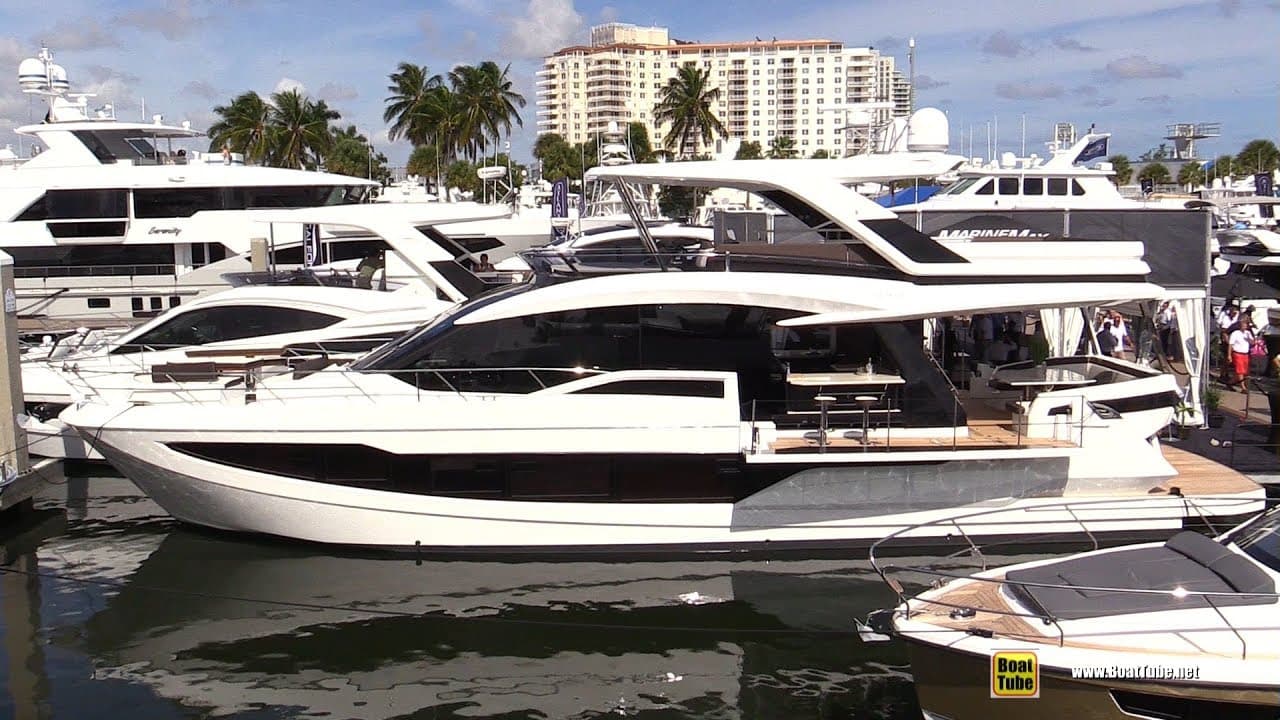
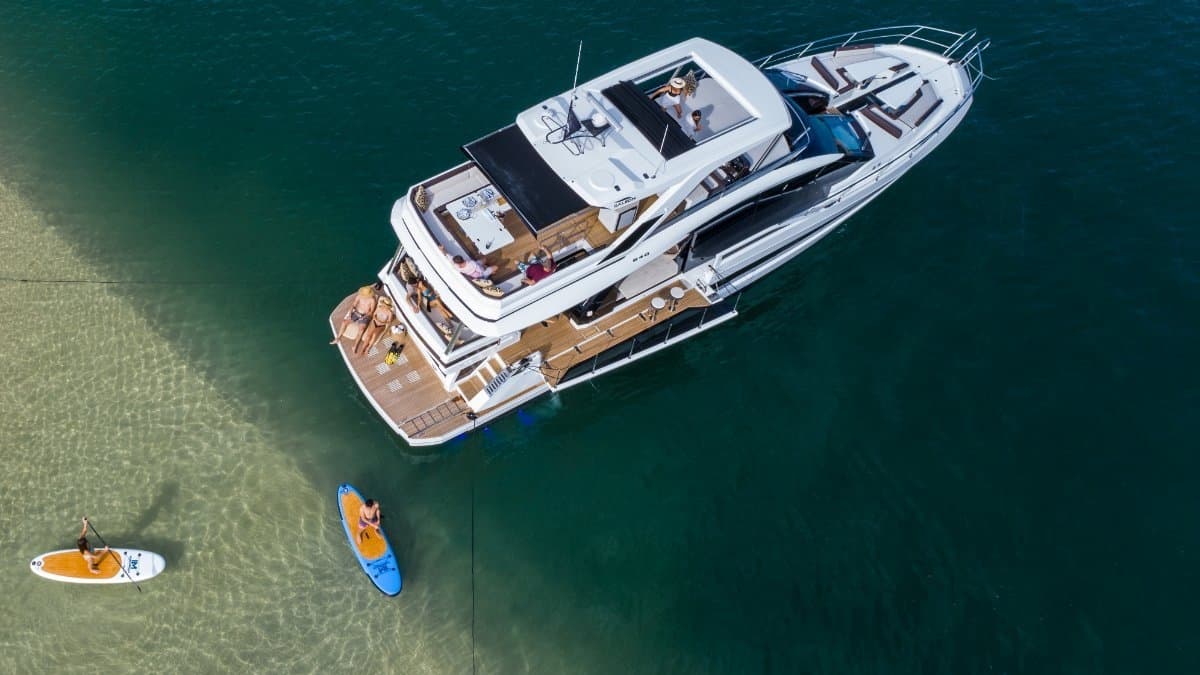
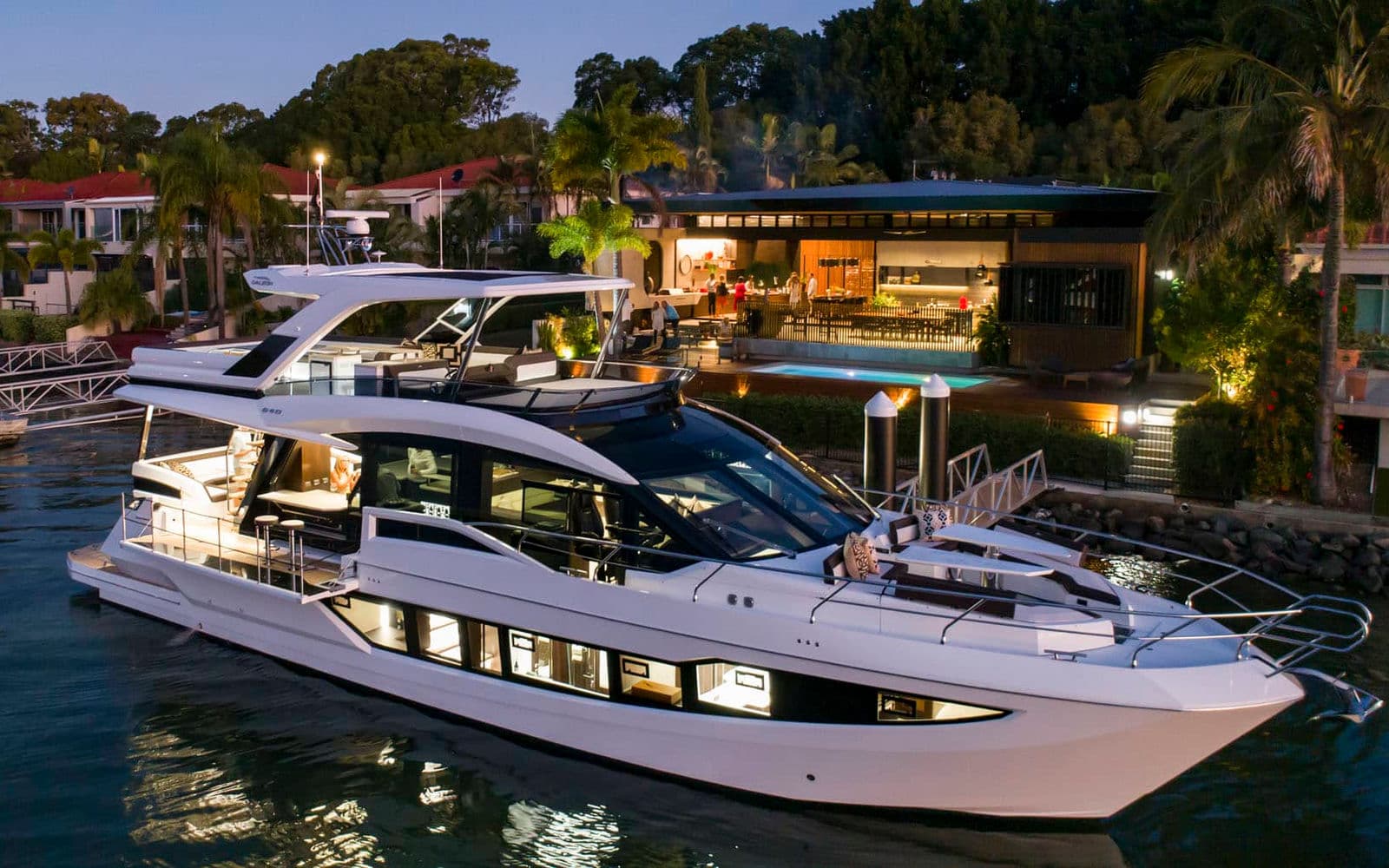
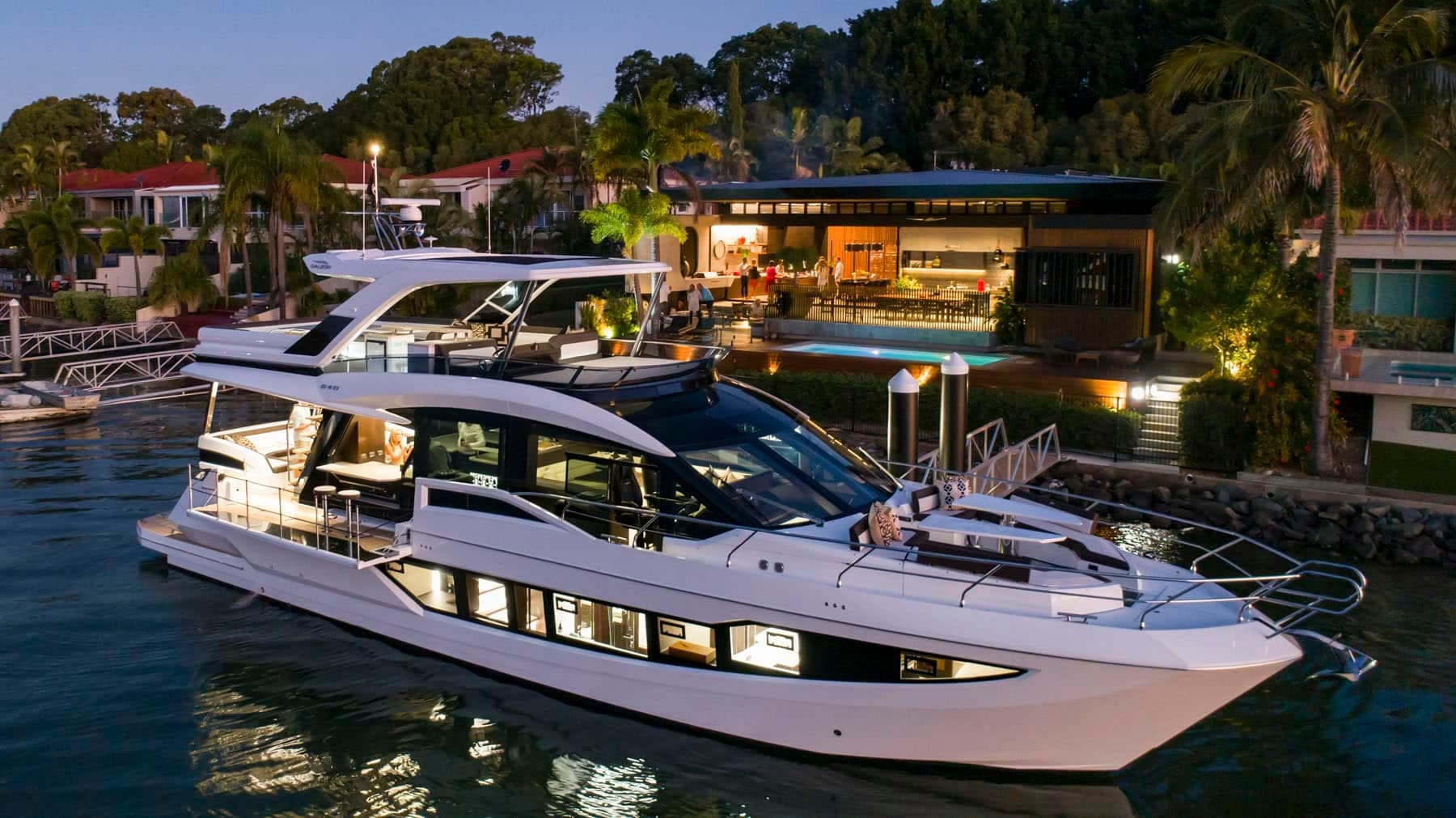
A new Galeon 640 Fly, the boat we run, lists in the high $2Ms before options. By the time you've fitted her out the way most owners do (premium audio, full bar, twin tenders, upgraded electronics, paint protection), you're staring at $3.2M to $3.8M.
Then come the operating costs. The number you'll hear most often from brokers is "10 to 15% of purchase price annually." That's optimistic, and it presumes everything goes right. Here's what that 12% actually buys for a $3.5M yacht:
- Slip fee in San Diego or Newport (premium marina, T-head or end-tie): $60K, $95K/yr
- Captain (USCG licensed, full-time, even part-time use): $140K, $180K/yr loaded
- First mate / deckhand (often required by insurance for vessels this size): $70K, $95K/yr
- Insurance (hull + liability, named operators): $45K, $80K/yr
- Fuel (figure 80 hours/year × 35 gph × $6/gal): $17K
- Maintenance, haul-outs, bottom paint, zincs, brightwork: $60K, $120K/yr
- Storage of toys, dock services, cleaning, detailing: $15K, $25K/yr
- Dockage at destinations (Catalina, Newport from SD, marinas you visit): $5K, $12K/yr
Annual operating: roughly $410K to $625K when you sum the lines above. Call it $500K in a normal year.
Then depreciation. A new Galeon 640 Fly will lose 12 to 15% in year one and 8 to 10% per year for the next several. That's another $300K, $400K/year in foregone capital, money you would have had if you hadn't bought the boat.
Total true annual cost on a $3.5M yacht: $800K, $900K.
If you use the boat 25 days that year, and most owners use them less, your cost per use day is roughly $32K, $36K. The boat sits at the dock 340 days a year quietly converting your money into salt corrosion.
This is before we get to the part that breaks marriages: the surprise bill. A bow thruster failure can be $25K repair bill. A genset rebuild is $18K. New canvas is $15K. The shaft seal goes; that's a haul-out for one part. Owners we know have all paid one $50K bill they didn't see coming, and most have paid two.
The tax shelter argument is real but smaller than the dinner-party version of it. The 2017 TCJA bonus depreciation that let owners write off luxury purchases against active business income is stepping down each year, 40% in 2025, 20% in 2026, and zero from 2027 onward, so the shelter is shrinking, not stable. For most California owners with proper substantiation, you can still save 25 to 35% of the cost in deferred taxes for now, but the IRS treats yacht use very strictly and the audit risk is non-zero. Verify current rules with your tax advisor before pricing the shelter into the decision.
Who full ownership is for: people who genuinely want 100+ days on the water per year, want a specific custom boat, and treat the depreciation as the cost of owning a piece of art they happen to live on.
Path 2. Fractional ownership
Fractional programs split a single yacht among four to ten partners. On paper, you pay 1/N of the boat and 1/N of the operating costs.
A 1/4 share in a comparable yacht runs $700K, $950K to enter, plus $95K, $140K/year in fees. So your three-year all-in is roughly $985K, $1.37M for somewhere between 30 and 60 use days, depending on the program's scheduling rules.
The math improves on owning. The reality is worse. Here's what fractional doesn't show you on the brochure:
Scheduling collapses on the weekends you actually want. Memorial Day, July 4, Labor Day, the first weekend of every season, every shareholder wants those, and the rotation system means you'll get one of them every other year, sometimes every third. The other partners aren't bad people; they just want what you want.
Decisions need consensus. New canvas? New tender? Re-paint? Skip a season's electronics upgrade? Four owners, four opinions, often one accountant who tightens his jaw at every spend. The pattern in fractional ownership is that partners spend a meaningful chunk of their boating energy on partner-group coordination, and that energy is not why anyone bought into a yacht.
The exit is the killer. If you want out, you're selling a 1/4 share in a depreciating asset to a buyer who has to like the other three partners. Resale of fractional shares can take meaningful time to clear, and the resale market for a depreciating partial-interest asset rarely favors the seller.
The crew is shared. The captain on a fractional yacht serves all the partner families, which means baseline professionalism is preserved but the kind of personal, preference-aware service that comes from a single-yacht-and-small-roster setup is structurally hard to deliver.
Who fractional is for: people who want roughly the same product as full ownership at lower commitment, and who have either a small group of pre-vetted partners or a very high tolerance for committee dynamics.
Path 3. Yacht clubs
Traditional yacht clubs are the cheapest legal way to get into the world of recreational boating. Initiation fees in San Diego and Newport range from $8K (newer clubs, social-focused) to $110K+ (the legacy clubs with deep waitlists). Annual dues are $3K, $22K.
For that, you get clubhouse access, a bar, a pool sometimes, racing fleets, social events, and, and this is the part most prospective members miss, very limited access to anything resembling a 65-foot luxury yacht.
Most yacht clubs aren't yacht clubs in the literal sense. They are sailing clubs, social clubs, and fleet-of-22-foot-J-boats clubs. If you want to charter a 65-footer through a yacht club, you're looking at a $2,800/hour fee on top of your dues, with a 25 to 35% gratuity expected, plus food, beverage, and fuel. A 6-hour day pegs out at $22K, $28K, comparable to chartering through a non-club broker.
A few of the legacy clubs do operate larger fleet vessels members can take out, but availability is limited, the boats are generally not new, and the queue at a popular weekend is real.
Who a yacht club is for: people whose primary goal is community, racing, or social calendar, not actually being on a 65-foot motoryacht.
Path 4. Private charter (no membership, no club)
The simplest path to time on a luxury yacht is also, on a per-day basis, the most expensive: hire one when you want it.
Advertised hourly rates in SoCal for a 65 to 70 foot yacht run $2,200, $3,400. That's the headline number. Here is what a 4-hour Saturday charter actually costs:
- Base charter (4 hr × $1,800/hr, captain, crew, fuel, dockage all bundled): $7,200
- 20% service fee on base: $1,440
- Bartender (4 hr): $200
- Catering for 12 ($85/guest): $1,020
- Premium open bar ($85/guest × 12 guests, 4-hour package): $1,020
- Linens, extras, cleaning add-on: $300
True cost: about $11,200. That $1,800/hour line item became closer to $2,800/hour all-in. Most published charter rates double once you add the bar, the gratuity, and the catering minimum.
Charter once a quarter at this rate and you're at about $45K a year for 16 hours of water time. Not nothing, but you'll know the captain by name, the crew will be gracious, and you'll own none of the headaches. For a buyer who wants 4 to 8 use days per year and doesn't care about price-per-hour, charter is the rational answer.
The math falls apart fast as days-per-year climbs. By 20 four-hour days a year, you've spent about $220K for the same 80 hours an Executive member gets included. A more typical pattern at this boat size is 10 full-day (8-hour) charters at roughly $18K each, which lands around $180K. Same 80 hours, fewer trips, similar verdict.
Path 5. Membership (what we sell)
Here's where we stop pretending we're a neutral third party, we built Artizia because we couldn't find a path that solved the problems above. But we'll show our work.
Three tiers, capped at 18 members per location, all-inclusive (captain, crew, bartender, food, beverages, fuel, yes really):
- Platinum, $15K initiation, $1K/month, 8 charter hours/year, 4-month priority booking. Year 1: $27K. Year 2+: $12K.
- VIP, $30K initiation, $4K/month, 32 charter hours/year, 6-month priority booking. Year 1: $78K. Year 2+: $48K.
- Executive, $100K initiation, $7K/month, 80 charter hours/year, 12-month priority booking. Year 1: $184K. Year 2+: $84K.
Compare that to the same 80 hours via the other paths, on a cash basis, what actually leaves your account each year:
| Path | Year 1 cash | Year 2+ cash |
|---|---|---|
| Full ownership ($3.5M, 20% down financed) | ~$1.48M | ~$780K |
| Fractional (1/4 share, cash entry) | ~$940K | ~$120K |
| Charter (20 × 4-hr trips) | ~$220K | ~$220K |
| Artizia Executive | $184K | $84K |
A note on basis. These are cash numbers, the checks you actually write. The ownership row assumes a typical 20% down on $3.5M financed over 20 years at 8%. An all-cash buyer pulls the entire purchase into year one ($4M) and then runs about $500K a year. Fractional assumes a lump-sum entry; financing a fractional share is unusual but if you do, the curve flattens. Paper depreciation sits on top of all of this, the boat losing value rather than money leaving your bank, and would add roughly $400K a year to the ownership row and about $100K a year to fractional. We didn't include depreciation in the table because no one's bank statement does.
The Executive math, more cleanly: in year one, you write checks for about 12% of what a financed owner writes for the same 80 hours. In year two onward, about 11%. Even against charter, Executive is cheaper from year two forward, and you get the 80 hours without the per-trip choreography.
The honest answer to "which path is right"
Most buyers we talk to are converging on a number between 15 and 50 days a year. Below 15, charter is rational. Above 100, ownership is rational. The middle 15-to-100 band is exactly where membership wins by the most.
The other variables that should move the answer:
Predictability matters. Surprise $25K maintenance bills are a tax on owning. Predictable monthly dues are a feature of membership.
Booking certainty matters. Fractional fails at exactly the weekends you care about. Membership with caps (we run 18 max) preserves real availability.
Exit risk matters. Selling a yacht or a fractional share is a 9 to 18 month problem. Letting a membership lapse is an email.
Lifestyle preference matters. Some people genuinely want to own a thing. We do not begrudge that. We're for the people who want the day on the water, not the asset.
If the math points one way and your gut points another, listen to your gut, but be sure you've actually seen the math. Most of the buyers who walk in with "I want to own one" are people who never had it presented to them this way. Some still own. Most don't.
If you want us to walk through your specific numbers, your usage patterns, your financial picture, that's what an intro call is for. We'll bring the spreadsheet.